
Make AI Work for Your Business
Practical AI, ML & Generative AI Solutions
Artificial Intelligence is changing how organizations work with information, automate processes and make decisions. Applied Information Technology Solutions helps organizations identify where AI can provide real business value and then turn those opportunities into practical, deployable solutions.
Our approach brings together Artificial Intelligence, Machine Learning and Generative AI with the business processes, data, systems and people required to make those technologies useful.
AI should not be introduced simply because it is new. The business problem comes first. AITS helps organizations identify the right opportunities, evaluate the available technologies and establish the governance required for responsible adoption.
The objective is practical: use AI where it can improve the way people work, increase access to information, automate repetitive activities, support better decisions and create measurable business value.
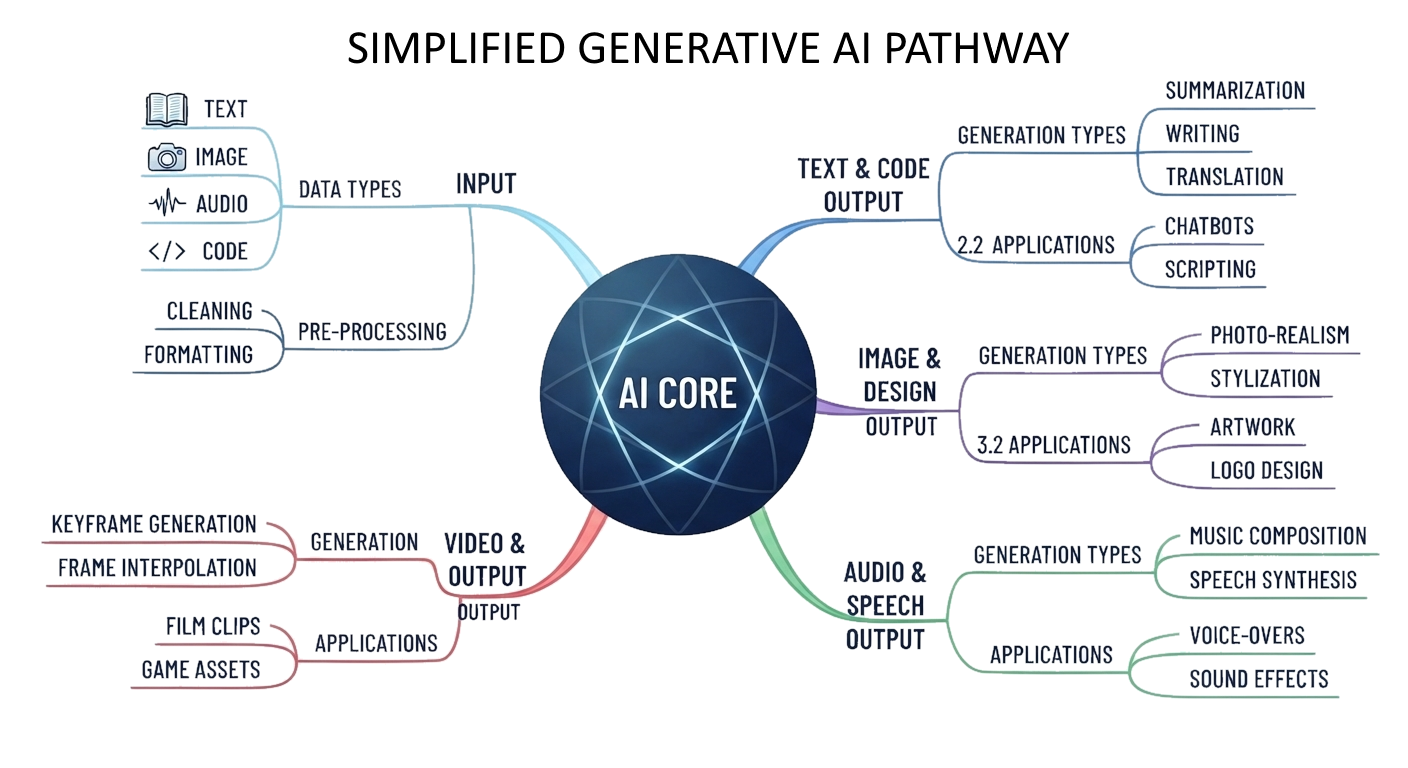
From AI Opportunity to Business Solution
Successful AI adoption requires more than selecting a model or launching a chatbot. The underlying data, business process, technology architecture, security, governance and user experience all need to work together.
AITS works across these elements to help organizations move from experimentation to practical AI solutions that can be integrated into existing business operations.
AI, ML & Generative AI Capabilities
Practical applications of AI can support people, processes and information throughout the organization.
-
AI Strategy &
Use CasesIdentify practical AI opportunities, prioritize use cases and establish a roadmap that connects AI investment to measurable business objectives.
-
Intelligent
AutomationCombine AI with workflow and automation technologies to reduce repetitive work, accelerate processes and support people in their daily activities.
-
Generative AI &
LLMsApply large language models to knowledge access, content generation, summarization, analysis, conversational interfaces and other information-intensive activities.
-
AI Knowledge
SolutionsMake organizational knowledge more accessible through AI-assisted search, retrieval, summarization and question-answering across approved business information.
-
AI Integration
Connect AI capabilities with existing applications, data sources, workflows and enterprise platforms rather than creating isolated technology solutions.
-
AI Agents &
AssistantsDesign AI-assisted workflows that can help users retrieve information, perform tasks, coordinate activities and interact with business systems.
-
Machine Learning
& AnalyticsUse data and machine learning techniques to identify patterns, support prediction, improve classification and provide additional insight into business operations.
-
AI Governance &
SecurityEstablish practical controls for data protection, access, responsible use, human oversight, model risk and organizational accountability.
Where AI Can Add Value
AI capabilities can be applied across many business activities when the right data, process and governance foundations are in place.
-
Document &
Content IntelligenceExtract, classify, summarize and analyze information contained in documents and other business content.
-
Knowledge
ManagementHelp employees find and understand organizational knowledge without having to navigate multiple repositories and systems manually.
-
Process
AutomationApply AI to processes that require classification, interpretation, decision support or interaction with unstructured information.
-
Decision
SupportCombine data, analytics and AI-generated insight to help people understand complex information and make informed business decisions.
-
Customer &
Employee ExperienceUse conversational AI and intelligent assistants to improve access to information and support common interactions.
-
Operational
IntelligenceCombine operational data and AI techniques to identify trends, exceptions, opportunities and areas requiring attention.
-
Data Quality &
PreparationPrepare, validate and structure business data so it can support analytics, machine learning and AI applications.
-
Risk &
ComplianceApply AI responsibly while maintaining appropriate controls around sensitive information, access, decisions and human oversight.
Generative AI in the Enterprise
Generative AI can become an enterprise capability when it is connected to trusted information, defined business processes and appropriate controls.
-
Content
GenerationAssist with drafting business content, communications, documentation, summaries and other knowledge-intensive work.
-
Enterprise
SearchUse retrieval and language models to make approved organizational information easier to find and understand.
-
RAG &
Grounded AIConnect language models to controlled business information so responses can be grounded in relevant organizational content.
-
AI
AssistantsDevelop assistants that help employees navigate information, complete tasks and interact with approved business systems.
-
Analysis &
SummarizationAccelerate the review of large volumes of business information by using AI to organize, summarize and identify relevant information.
-
Responsible AI
Build appropriate human review, security, privacy, governance and oversight into enterprise AI implementations.
AI Adoption Requires More Than Technology
The most effective AI solutions connect technology with the organization that must use, govern and maintain it.
-
People
Users need to understand what AI can do, where it should be used, where human judgment remains necessary and how to work effectively with AI-enabled systems.
-
Process
AI works best when it is incorporated into a defined business process with clear responsibilities, review points and measurable outcomes.
-
Data
AI depends on accessible, relevant and appropriately governed data. Data quality and information architecture are fundamental to successful AI adoption.
-
Technology
Models, applications, integrations and infrastructure need to work together within the organization's existing technology environment.
From Experimentation to Enterprise AI
AITS helps organizations move beyond isolated AI experiments toward practical solutions that can be integrated into everyday business operations.
AI projects often begin with a question: What can this technology do? The more important business question is: What should this technology do for us?
AITS helps answer that question by connecting business objectives, processes, data and technology. Whether the opportunity involves machine learning, generative AI, intelligent automation or enterprise knowledge management, the focus remains on creating a solution that people can actually use.
The objective is not simply to add AI to the business. It is to make the business more capable through the thoughtful application of AI.